―
What Is COP (Conference of the Parties)?
―
Imagine a credit card shared by an entire family.
One person spends recklessly, but everyone in the family has to share the bill.
Our planet works in much the same way.
Nepal accounts for just 0.01% of the world's cumulative carbon dioxide emissions. Yet last month, the collapse of a Himalayan glacier triggered devastating floods, with initial recovery costs expected to reach 6.72 trillion Korean won.
It is as if a country that barely used the credit card has been handed one of the biggest bills.
Around the same time, Europe also lost at least 35,000 people to record-breaking heatwaves. Although Europe has historically been among the biggest users of this shared credit card, this time it felt the weight of the bill itself.
Simon Stiell, Executive Secretary of the UN Framework Convention on Climate Change (UNFCCC), visited the European Parliament and urged the EU to take stronger climate action ahead of COP31 in November.
Every year in late autumn, representatives from countries around the world gather in conference halls, sometimes debating a single sentence well past midnight.
Why do they go to such lengths?
Because how this “family bill” is divided — who pays, and how much — has implications for everything from power plants and vehicle policies to forest protection and financial assistance for climate disasters.
This gathering is called COP, the Conference of the Parties to the United Nations Framework Convention on Climate Change (UNFCCC).
[COP, Conference of the Parties]
COP is the supreme decision-making body of the United Nations Framework Convention on Climate Change (UNFCCC), where nearly every country in the world, along with the European Union, gathers to discuss emissions reductions, adaptation, climate finance, technology cooperation, and progress reviews.
Think of it as a meeting of Earth's extended family, where everyone comes together to discuss who should pay how much of the bill for the climate crisis.
The number following COP indicates which meeting it is. COP21, for example, was the 21st Conference of the Parties, held in 2015, where the Paris Agreement was adopted.
But wait..
Does COP refer only to climate conferences?
Not necessarily.
Other international agreements, such as the Convention on Biological Diversity, also have their own COP meetings. However, when COP is followed by a number, it usually refers to the climate conference.
While formal decisions are made by government representatives, scientists, civil society organizations, Indigenous representatives, young people, businesses, and the media also take part.
Rather than a meeting exclusively for diplomats, COP is more like a global forum where the world's climate policies come together for discussion.
▲ (Video Coming Soon) A Sunhak Peace Prize video introducing COP.
Source: Sunhak Peace Prize Official YouTube Channel
―
It All Began in 1992
When the World Began Tackling the Climate Crisis Together
―
COP has its origins in the United Nations Framework Convention on Climate Change (UNFCCC) of 1992.
The Convention was adopted in New York in May that year, and opened for signature at the Earth Summit in Rio de Janeiro, Brazil, in June.
This marked the moment when the international community recognized climate change not as an environmental problem for individual countries, but as a shared challenge that required collective action.
For the first time, countries formally acknowledged in writing that smoke rising from a factory chimney in one country could affect the weather on the other side of the planet.
Behind this agreement were warnings from scientists.
Established in 1988, the Intergovernmental Panel on Climate Change (IPCC) brings together and assesses climate research from around the world. Its first assessment report, published in 1990, provided the scientific foundation that helped drive negotiations on an international climate agreement.
The Convention entered into force in 1994, and the first Conference of the Parties, COP1, was held in Berlin, Germany, in 1995.
Since then, countries have gathered again every year.
After all, the climate crisis is not a problem that can be solved with a single promise. It is a long-term challenge that requires countries to continually revise their goals and review their progress.
―
A Look Back at COP: The Road So Far Shows the Way Forward
―
Not every conference makes it into the history books. But some COP meetings have significantly changed the direction of global climate action.
Let's take a look at the key milestones.
1997 · COP3 Kyoto
The Kyoto Protocol was adopted, establishing legally binding emissions reduction obligations for developed countries.
2009 · COP15 Copenhagen
Although negotiations failed to produce a comprehensive agreement, countries set a goal of mobilizing $100 billion annually to support developing countries.
2015 · COP21 Paris
The Paris Agreement was adopted, bringing all countries into a shared commitment to keep global temperature rise well below 2°C and pursue efforts to limit it to 1.5°C.
2021 · COP26 Glasgow
For the first time, countries explicitly called for the “phasedown” of unabated coal power and finalized the detailed rules for implementing the Paris Agreement.
2022~2023 · Sharm El-Sheikh and Dubai
Countries agreed to establish a Loss and Damage Fund. For the first time, a COP agreement also included a commitment to “transitioning away from fossil fuels.”
2024~2025 · Baku and Belém
Countries expanded the climate finance goal for 2035 and discussed a roadmap to scale up public and private climate finance to $1.3 trillion annually.
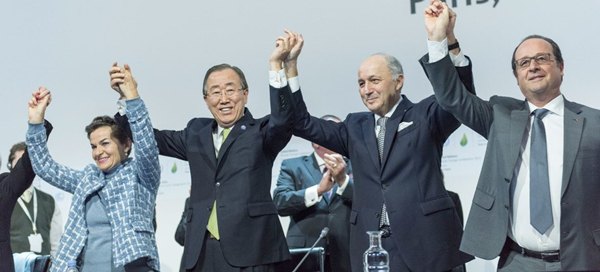
▲ Source: UN News. Delegates celebrate the adoption of the Paris Agreement at the closing plenary of COP21 in Paris in 2015.
At first, the central question was “Who should cut emissions, and by how much?”
Over time, the agenda expanded to include “How can we prepare for climate impacts?”, “Who should help those already affected?”, and “Where will the money come from?”
In other words, climate negotiations have gradually become more closely connected to the practical realities of everyday life.
Climate Finance Goals: Look Beyond the Numbers to Understand Their Scope
2020 Goal · $100 Billion Annually
Collectively mobilized by developed countries to support developing countries
2035 New Official Goal · At Least $300 Billion Annually
Led by developed countries, with contributions from public and private finance
2035 Broader Scale-Up Goal · At Least $1.3 Trillion Annually
Encompassing all countries, international financial institutions, and the private sector
▲ The $100 billion and $300 billion targets are collective goals led by developed countries. The $1.3 trillion target is a broader goal encompassing all public and private financial resources, so the figures should not be compared based on their amounts alone.Source: UNFCCC, COP15, COP29, and the Baku to Belém Roadmap
―
What Do Countries Negotiate at COP?
―
If you think of COP as simply a meeting to reduce greenhouse gas emissions, you're only seeing half the picture.
Under the broad heading of climate change, countries must tackle a wide range of different challenges.CJ
Breaking them down into five categories makes things much easier to understand.
Five Key Issues on the COP Agenda
1. Mitigation
Countries negotiate how quickly to reduce greenhouse gas emissions from coal, oil, gas, and deforestation.
2. Adaptation
This covers disaster prevention infrastructure, water management, and early warning systems to prepare for heatwaves, floods, droughts, and rising sea levels.
3. Climate Finance
Countries negotiate who should pay how much of the cost of climate action, and whether that support should come in the form of grants or loans.
4. Loss and Damage
Countries discuss how to support those facing climate-related losses that cannot be prevented through adaptation, such as land being submerged and livelihoods being lost.
5. Implementation and Review
Countries report on and compare their progress in meeting their commitments. This is also where rules for calculating emissions and operating carbon markets are established.
Let's think of it as a house with a water leak.
Mitigation means turning off the tap, adaptation means putting up flood barriers, and loss and damage means repairing a house that has already been flooded.
Does “loss and damage” still sound a little abstract?
Let's take a closer look at Nepal, which we mentioned earlier.
The 2026 Nepal Floods
A Test for the Loss and Damage Fund
The collapse of Himalayan glaciers devastated hydropower plants, roads, and homes across Nepal and Tibet, leaving more than 1,300 people dead and over 5,300 missing.
The Nepalese government requested support from the Loss and Damage Fund, established at COP27 in 2022.
However, the fund has received only $448 million (approximately 603.5 billion Korean won) — roughly half of the amount pledged.
Compared with the $5 billion (6.72 trillion Korean won) needed for recovery, this would cover just 9% of the costs, even if the entire amount were spent on Nepal alone.
Once again, a country that barely used the credit card has been left with one of the heaviest bills.
COP31 in November is expected to be the fund's first major test.
Source: Segye Ilbo, “Nepal's Flood Recovery Costs Exceed 6 Trillion Won… COP31 to Test ‘Climate Compensation’” (September 12, 2026)
These five issues are not separate from one another.
Reducing coal-fired power generation requires new industries and jobs, while preparing for disasters requires funding and technology.
That is why COP is not only an environmental conference, but also a forum for discussing the economy, social welfare, and development.
―
Why Does It Take So Long?
Why We Still Need COP
―
Some countries have grown wealthy by making the most use of the shared credit card, while others have barely used it but are now facing enormous bills.
Countries that depend on fossil fuel exports sit at the same negotiating table as small island nations at risk of losing their land to rising sea levels.
Three Reasons Why Negotiations Take So Long
① Countries Have Different Responsibilities
Countries with high historical emissions and those whose emissions are rising rapidly today have different views on how responsibility should be shared.
② Costs and Livelihoods Are at Stake
Even when countries agree on the need to reduce fossil fuel use, deciding who should bear the costs of the transition and its impact on jobs is far from easy.
③ Most Decisions Are Made by Consensus
When strong objections remain, reaching an agreement becomes difficult. A single word may be revised repeatedly, and negotiations can drag on.

Of course, COP is not a magic solution.
Adopting an agreement does not mean power plants will disappear the next day, nor does it create a “world government” that can enforce national policies on behalf of individual countries.
Still, COP establishes shared goals and common rules.
It provides a framework for measuring emissions consistently, making each country's commitments public, and discussing how financial resources and technology should be mobilized.
In other words, it serves as the world's shared climate rulebook and report card.
Just because it is imperfect does not mean we can do away with it.
The climate crisis does not respect national borders, and no single country can solve it alone.
The very act of bringing different countries to the same table is already the first step towards a solution.
―
The Gap Between Promises and Reality
How Far Do We Still Have to Go?
―
While commitments have continued to accumulate at COP, the actual pace of emissions reductions is still not fast enough.
According to the United Nations Environment Programme's (UNEP) 2025 assessment, even if countries fully implemented all their nationally determined contributions (NDCs) submitted by September that year, global warming was projected to reach 2.3–2.5°C by the end of the century.
If only the policies in place at the time were maintained, warming was projected to reach around 2.8°C.
The Paris Agreement's 1.5°C goal is measured against the long-term average temperature over several decades, rather than the temperature of any single year.
Looking at individual years, however, 2024 was already approximately 1.55°C warmer than the pre-industrial average.
Projected Global Warming Pathways This Century: The 2025 Assessment
1.5℃ · The long-term goal pursued under the Paris Agreement
2.3~2.5℃ · If all emissions reduction commitments submitted by September 2025 are fully implemented
2.8℃ · If only the policies in place at the time are maintained
▲ These projections were calculated by UNEP based on nationally determined contributions (NDCs) submitted by September 2025 and policies in place at that time. The projected pathways may change if countries strengthen their policies.Source: UNEP, Emissions Gap Report 2025
But that does not mean we can simply give up and say, “It's already too late.”
Even a difference of just 0.1°C can change how many people and ecosystems are exposed to heatwaves, floods, and droughts.
So how much further do we need to cut emissions?
The same report estimates that global greenhouse gas emissions need to fall by around 55% by 2035 compared with 2019 levels — a reduction of more than half.
But this is not a responsibility that all countries share equally.
The G20 countries alone, excluding the African Union, account for 77% of global greenhouse gas emissions.
Going back to our shared family credit card analogy, a handful of countries are responsible for most of the bill.
And the future of the entire planet depends on how much those countries are willing to cut back.
Share of Global Greenhouse Gas Emissions: 2025 Assessment
※ The African Union is excluded from the G20 figure.
▲ The pace of emissions reductions among major emitters plays a decisive role in shaping the world's overall climate trajectory.Source: UNEP, Emissions Gap Report 2025
―
How to Make Sense of COP News
―
COP news is often filled with unfamiliar acronyms and big numbers. But you don't need to memorize them all.
Just asking three questions can help you understand what really matters.
Three Questions to Ask When Reading COP News
1. Have the Targets Actually Become More Ambitious?
What matters more than new wording is whether the timelines and scope of emissions reductions have become more concrete and ambitious.
2. Is It Clear Who Will Provide the Funding and Take Responsibility?
Rather than focusing only on how much money is needed, look at who will provide it, how it will be raised, and by when.
3. Will the Commitments Translate into Domestic Policies?
Look at whether international commitments are reflected in national energy, transport, and building policies, as well as laws and budgets.
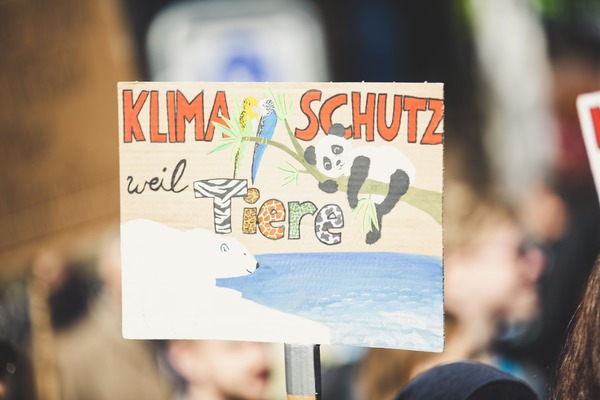
▲ Young climate activists take to the streets, calling on governments to fulfil their climate commitments.
Agreements reached inside conference halls are not enough. Governments must turn their commitments into laws and budgets, while businesses must make real cuts in emissions. These efforts must also go hand in hand with support for the countries and people most vulnerable to climate change.
Progress Must Happen Both Inside and Outside the Conference Hall
1. What the International Community Must Do
Set more ambitious emissions reduction targets, transparently monitor progress, and ensure that climate finance and technology reach those who need them most.
2. What We Must Do
Alongside changing our energy use and travel habits, we must hold governments and businesses accountable for their commitments and make our voices heard.
COP is slow and, at times, frustrating. Still, it is one of the few places where the entire family can sit down together, look at the same bill, and work out how to pay it.
What matters is not simply that the conference takes place, but whether its promises lead to real emissions reductions, adaptation measures, and support for those suffering climate-related losses and damage.
For today's negotiations to translate into a safer everyday life for future generations, both the words agreed upon inside the conference hall and the actions taken across our societies must change.
Written by Sharon Choi
Director of Planning
Sunhak Peace Prize Secretariat
Further Readings
Conference of the Parties - UN Convention on Climate Change (COP27)
References & Sources
1. UNFCCC, United Nations Framework Convention on Climate Change
4. UNFCCC, The Paris Agreement
5. UNFCCC, Nationally Determined Contributions
6. UNFCCC, The Glasgow Climate Pact — Key Outcomes from COP26
7. UNFCCC, COP27 Agreement on the Loss and Damage Fund
8. UNFCCC, COP28 Agreement and the UAE Consensus
9. UNFCCC, COP29 Agrees to Triple Finance to Developing Countries
10. UNFCCC, Baku to Belém Roadmap to USD 1.3 Trillion
11. COP30 Presidency, COP30 Approves Belém Package
12. WMO, 2024 Warmest Year on Record at About 1.55℃ Above Pre-industrial Level
13. UNEP, Emissions Gap Report 2025: Off Target
14. "Over 6 Trillion Won for Nepal Flood Recovery... COP31 Becomes a Testbed for 'Climate Compensation'" (2026.9.12)
-
PREV What Is the International Rule of Law?
-
NEXT No next post.