What Is Media Literacy?
―The War of Facts
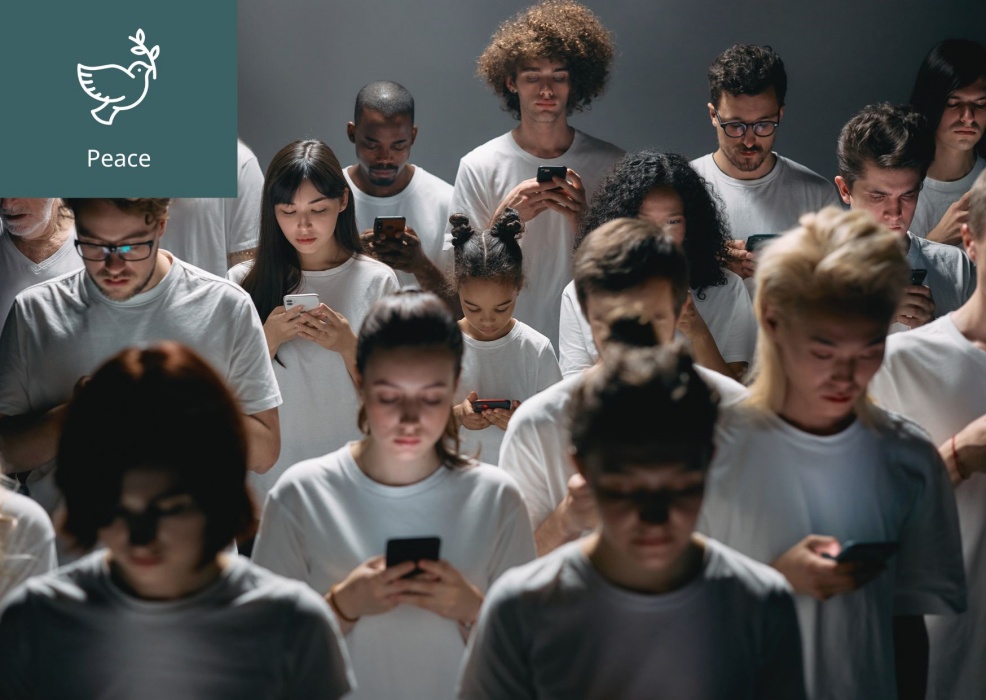
―How many hours did you spend consuming media today?The average American adult spends more than 10 hours a day consuming media about 40% of their waking hours.Now that media has become central to our lives, the real question is no longer how much we consume, but what we believe to be true.In October 2025, an AI-generated fake video of NVIDIA’s annual technology event caused public controversy.(This image is unrelated to the actual incident.)In 2025,a livestream appeared on YouTube.On screen was the stage of NVIDIA’s annual technology event, and standing at the podium was CEO Jensen Huang.He spoke about new products and mentioned “next-generation technology investment opportunities.”The video looked completely natural.So natural that it left little room for doubt.The number of viewers rose quickly, and messages like these began appearing in the live chat:“This is the live announcement, right?”“If I join now, can I get early access?”Some viewers clicked the link displayed below the video and scanned the QR code.Some connected their cryptocurrency wallets, believing the phrase “official partner early access.”But the entire livestream was a fake video created with AI.The real NVIDIA official event was taking place separately, but ironically, the fake video recorded more views than the actual event livestream.The reason this incident feels so unsettling is simple:Fake information is no longer crude or easy to spot.And it is precisely at this point that we find ourselves standing in the middle of the war of facts.In this era, the ability we need is not faster access to information.It is the power to pause, verify, and think critically media literacy.―
What Is Media Literacy?
―Media literacy is the eyes and ears of the digital age.More precisely, it refers to the ability to access, analyze, evaluate, create, and act on information (UNESCO). The world inside our smartphones is like a vast ocean.Clean water flows through it, but so does water mixed with poison.A person without media literacy is like someone who drinks seawater straight from the ocean.It may seem to quench their thirst, but it slowly harms the body.By contrast, a person with media literacy filters the water before drinking it.They check the source,question the intention,and separate facts from emotions.What we need now is not more information.It is the ability to filter information and make sound judgments.―
Types of Media LiteracyMedia Literacy Is Not a “Feeling,” but a Combination of Skills
―Media literacy is not a single skill.It is a layered set of civic abilities needed to live in the digital age.① Critical Interpretation of InformationThe ability to ask, “Why was this information created?”Every piece of media content contains the intention and perspective of the person or organization that created it.Even an article that looks like news may actually be promotional content designed to advertise a specific product or serve a particular interest.Critical interpretation of information means the ability to ask:• Who created this?• What purpose does it serve?• What does it emphasize, and what does it leave out?When we have this ability, we can read not only the surface of information, but also its structure and context.② Information Search Skills The ability not to trust the first search result Information search skills are not simply about knowing how to search online.They are about being able to identify reliable information.• Is the source clearly identified?• Is it from a credible institution?• Can the same information be verified through other trustworthy sources?Without this ability, the internet becomes not an ocean of knowledge, but an amplifier of confusion.(This is an AI-generated image.)③ Ability to Respond to Fake NewsThe ability to distinguish not just false information, but information designed to deceiveFake news is not merely incorrect information.It is information deliberately designed to mislead.That is why what we need is not a quick reaction, but a habit of verification.• Check the source• Examine the context of images and videos• Compare the information with other reliable sourcesIn a society with this ability, facts carry more power than sensationalism, and judgment becomes stronger than anger.④ Awareness of Deepfakes and AI ManipulationThe perspective that refuses to believe everything it seesIn the age of AI, media literacy goes beyond text.It now includes images and videos as well.Today, the fact that “there is a video” is no longer proof.What matters is the ability to judge multiple factors together:• Does the context feel natural?• Are the source and posting route trustworthy?• Does it match information from official channels?⑤ Information Creation and Ethical UseThe awareness that “I am also a producer of information”Today, we are all both consumers and distributors of information.Media literacy does not end with the ability to read information.It also includes the ability to share and communicate responsibly.• Do I cite the source?• Could this harm someone’s reputation or privacy?• Am I unintentionally amplifying hate or violence?When we are able to ask ourselves these questions, information bec mes not a weapon, but a public resource.―
Media Literacy Is a Public Capacity
―UNESCO defines media literacy not as an individual skill, but as a public capacity that sustains democratic societies, and presents the following three policy guidelines.《Media Literacy Policy Guidelines (UNESCO)》1. It Is Not Optional Education, but a Basic Civic CapacityMedia literacy is not simply about learning how to use devices, nor is it just one subject taught in school.It is a fundamental ability that every citizen must have in order to live in the digital age.• It includes the entire process of finding, understanding, evaluating, using, and creating information.• At its core is the ability to think critically and make sound judgments.• It is an essential condition for protecting democracy, human rights, and a peaceful society.▶ In other words, media literacy is not a “nice-to-have skill.”It is a capacity that becomes dangerous to lack.2. It Is a System That Must Be Designed by Society and the StateMedia literacy should not be left entirely to individuals.Governments must take the lead in designing it systematically.• It should be included not only in school education, but also in lifelong learning and teacher training.• Media, digital, and education policies must be organically connected.• A foundation must be built so that all generations from children to older adults can learn equally.▶ Media literacy is not an ability people should be expected to acquire on their own.It is public infrastructure that society must build together.3. It Must Be Measured, Evaluated, and ImprovedMedia literacy cannot end with a one-time campaign.We must continuously check whether people’s media literacy is actually improving.• Countries and regions must assess the level of media literacy in their societies.• They must measure whether education programs are truly effective.• Based on the results, policies must continue to improve in better directions.▶ This means media literacy is not a one-off event,but a public capacity that must be continuously managed and strengthened.―
What Happens When Media Literacy Collapses?
―▶ The Brain’s Ability to Make Rational Judgments Becomes ParalyzedFake news is no longer just background noise or harmless rumor.According to an investigation by EU DisinfoLab, disinformation surged by as much as three times ahead of elections, and 80% of political fake information spread through social media.When this happens, we can no longer tell who is telling the truth.What collapses is not simply a political party,but the very belief that “I am capable of making rational judgments.”▶ Anger Travels 10 Times Faster Than FactsFake news targets emotion before reason.It is often packaged around sensitive and provocative issues such as immigration, gender, and religion, drawing out the anger within us.Before we even have time to check the facts, we find ourselves pressing the “share” button in a state of outrage.The Stanford Internet Observatory has warned that continuous exposure to hate-based fake news can increase hostility toward specific groups by as much as 37%.▶ Our Wallets Are the First to Be HitWhen media literacy collapses, the first thing to suffer may be, surprisingly, our wallets.According to an FBI report, losses from cyber fraud amount to $10.2 billion per year around 13 trillion Korean won.We now live in an environment where people can easily be deceived by AI voice calls made with deepfake technology or fake investment websites that look highly convincing.―What Do I Believe Right Now?―Media literacy is not a skill for knowing more about the world.Rather, it is closer to an attitude:pausing unconditional trust for a moment, and equipping ourselves with healthy doubt.Every day, we swim through a flood of information.In that water, there are facts but there are also deliberate manipulations and clickbait designed to exploit our emotions.We cannot instantly determine whether every piece of information is true or false.But we can pause once.And before pressing “share,” we can check one more time.Now, ask yourself this question:“What do I believe right now?”Written by Sharon ChoiDirector of PlanningSunhak Peace Prize SecretariatReferences & SourcesMedia Literacy, Fake News & Trust in Media• UNESCO. Media and Information Literacy (MIL)— Defines media and information literacy as the capacity for critical understanding, evaluation, creation, and responsible use of information.https://www.unesco.org/en/media-and-information-literacy• Reuters Institute for the Study of Journalism. Digital News Report 2023— Reports that 52% of global news users say they do not trust news.https://www.digitalnewsreport.orgEducation, Information Gaps & Gen Z Literacy• OECD. Education 2030 Framework— Finds that students in low-income countries score approximately 40% lower in online information evaluation skills than those in high-income countries.https://www.oecd.org/education/2030-project/Spread of Fake News & Algorithmic Amplification• Vosoughi, S., Roy, D., & Aral, S.(2018). The Spread of True and False News Online.Science.— Demonstrates that false news spreads up to six times faster than true news on social media platforms.https://www.science.org/doi/10.1126/science.aap9559Deepfakes & AI-Manipulated Content• Sensity AI. The State of Deepfakes Report 2023— Reports a 13,000% increase in online deepfake content over the past five years.https://sensity.ai/reports/• Google Jigsaw. Deepfake Detection Project— Research and technology initiatives focused on detecting and verifying deepfake content.https://jigsaw.google.comInformation Production, Ethics & Civic Participation• OECD. Trust in Media and Digital Participation(2023)— Finds that 71% of Gen Z users have shared content online, while 61% lack awareness of the importance of source attribution.https://www.oecd.org• UNESCO. MIL Cities Report(2021)— Documents media literacy and citizen fact-checking programs across 600 cities worldwide, reducing misinformation spread by up to 35%.https://www.unesco.orgDemocracy, Hate & Social Impact• EU DisinfoLab. Disinformation and Elections Report(2022)— Shows that disinformation volume triples in the six months preceding elections, with 80% of political disinformation spreading via social media.https://www.disinfo.eu• Stanford Internet Observatory. Online Hate & Disinformation Report(2023)— Finds a 37% increase in hostility toward specific groups after repeated exposure to hate-based misinformation.https://cyber.fsi.stanford.edu/ioEconomic Damage & Cybercrime• Federal Bureau of Investigation (FBI). Internet Crime Report 2022— Reports USD 10.2 billion in cybercrime losses, driven by phishing, smishing, and AI-assisted financial fraud.https://www.ic3.govInternational Security & Peace• United Nations Security Council. Briefings on Disinformation(2023)— Warns that disinformation has become a new weapon in modern conflicts.https://www.un.org/securitycouncil• UNESCO. Media and Information Literacy for Peace— Frames media and information literacy as a core capacity for sustaining peace and social cohesion.https://www.unesco.org/en/media-and-information-literacy
25 May 2026

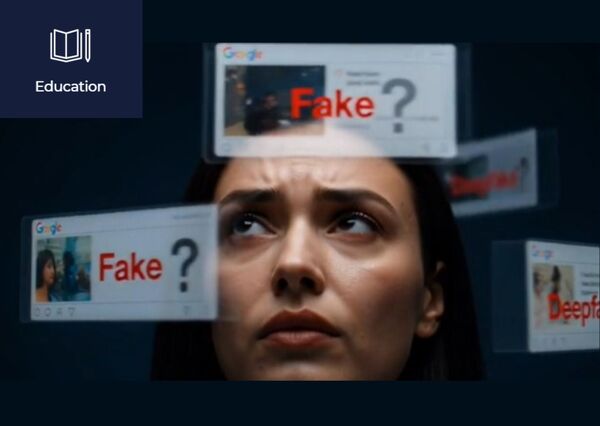 What Is Media Literacy? 25 May 2026
 What Is Digital Detox? 11 May 2026
 What Is Information Warfare? 28 April 2026
 What Is the Anthropocene? 13 April 2026
 What Is Gender Activism? 23 March 2026
 What Is Social Impact? 7 March 2026
 What Is Gender Equity in STEM? 25 February 2026
 What is Geoeconomic Confrontation? 10 February 2026
 What is AI Activism? 29 January 2026
 What is the Right to Water? 14 January 2026
 What Is Digital Colonialism? 22 December 2025
 What is Human Security? 9 December 2025