
―
Today, Your Day Is Being Recorded by the Earth
―
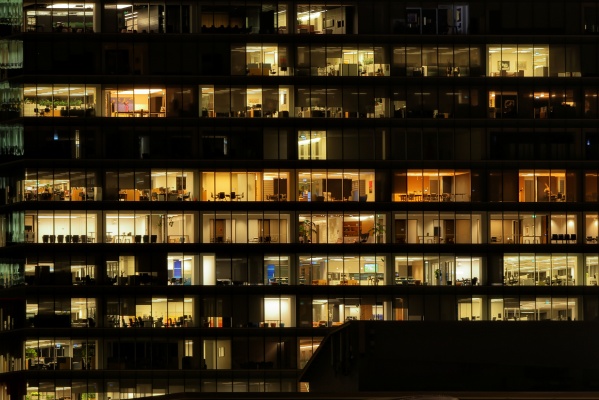
The air conditioner you turned on this morning.
That one takeaway cup.
The meat on your school lunch tray.
The charger left plugged in overnight.
This ordinary day doesn’t just disappear.
It accumulates like layers of sediment somewhere in the air, oceans, and soil.
In a way, the Earth has been quietly keeping a diary of our lives.
Science has given this era a name:
The Anthropocene.
An age in which human choices have begun to reshape the planet’s default settings.
Simply put, the convenience we choose today is becoming the environmental baseline for future generations.
If you’d like to learn more about the Anthropocene, please refer to the following article. ⇊ |
―
What Is the Anthropocene?
Why a “Geological Age” Bears the Name of Humans
―
The Encyclopedia Britannica defines the Anthropocene as:
“A new epoch in which human activity has begun to alter the Earth system on a geological scale.”
In the past, geological ages were defined by natural events such as ice ages, volcanic activity, and continental shifts.
But over the past 200 years, the force reshaping the planet has changed.
Now, instead of nature, we are the ones pressing the buttons.
• Fossil fuels → Global warming
• Overexploitation and destruction → Mass extinction
• Plastics, concrete, radiation → New geological layers
According to the IPCC Sixth Assessment Report:
• The global average temperature has risen by about 1.1°C compared to pre-industrial levels (1850–1900)
• It is very likely to reach 1.5°C around 2030
• Nearly 100% of the warming is caused by human greenhouse gas emissions
The reason the term Anthropocene feels uncomfortable is this:
It makes it impossible to hide the fact that we are both the cause and the consequence.
―
The Face of the Anthropocene
Human Footprints Through Data
―
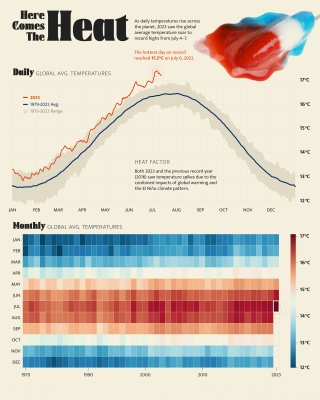
The Earth is now in a state of low-grade fever.
1.1°C
It may sound small.
But it’s closer to saying the Earth has a 38°C fever.
In other words, the planet is in a condition like:
“Not quite sick yet… but on the verge of breaking down.”
According to the IPCC Sixth Assessment Report:
• Extreme heatwaves have increased by about 5 times
• Extreme rainfall events have increased by 1.3 to 1.5 times
These are clear signals that the Earth’s climate system is shifting into a different mode.
(Source: Reuters)
If you’d like to learn more about climate science, please refer to the following article. ⇊ What is the IPCC(Intergovernmental Panel on Climate Change)? What are Planetary Boundaries? |
+
―
The Sixth Mass Extinction Has Already Begun
―
According to the 2019 IPBES Global Assessment Report
(Intergovernmental Science-Policy Platform on Biodiversity and Ecosystem Services):
• Up to 1 million species are at risk of extinction within the coming decades to centuries
• 75% of land and 66% of oceans have already been significantly altered
According to the WWF Living Planet Report 2022:
• Since 1970, global vertebrate populations have declined by an average of 69%
This means that in forests where 10 animals once lived, only about 3 remain today.
The Anthropocene asks us a fundamental question:
“On this planet, how will we live alongside other forms of life?”
―
The Ocean Is Running Out of Breath
―
The ocean has absorbed about 25% of the CO₂ we have emitted.
Because of this, the planet has been warming more slowly.
But the cost has been significant.
• pH 8.2 → 8.1
• Acidity increased by about 30%
When we say the ocean has become slightly more “acidic,” it means that shellfish and corals are finding it harder to build their homes.
In other words, chemical changes in the ocean ripple through the entire food chain.
And the ocean is also getting warmer.
According to UNESCO:
• The rate of sea-level rise has doubled since the 1990s
• By 2050, around 1 billion people will be living in areas at risk from rising seas
This is not just about water levels rising a little.
It means cities, homes, jobs, and food systems are all at risk.
If you would like to learn more about what is happening in the ocean, please refer to the following article. ⇊ |
―
We Are Living as if We Had 1.7 Earths
―
Each year, the Earth has a limit to how much it can regenerate.
Think of it as the planet’s annual salary.
The Global Footprint Network calculates this limit every year, calling it Earth Overshoot Day the date when humanity has used up all the resources the Earth can renew in that year.
According to the 2024 report, we had already used up that entire “budget” by August 1st.
Life after that point means:
• Cutting down forests faster than they can regrow
• Catching fish faster than oceans can recover
• Emitting carbon faster than the atmosphere can absorb
In other words,
we are living like a civilization running on an ecological overdraft.
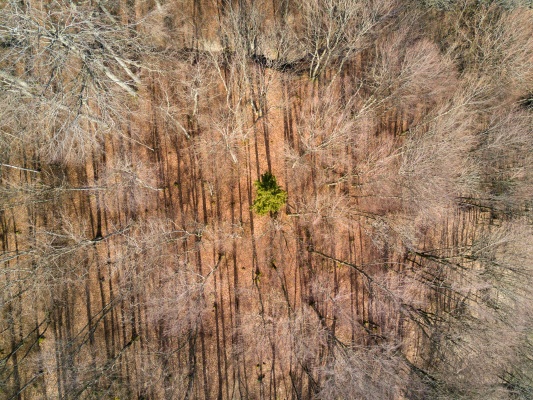
If you would like to learn more about the resources we use, please refer to the following article. ⇊ |
―
Cracks of the Anthropocene
Fractures Appearing in Our Everyday Lives
―
▶ Disasters Are Becoming the New “Normal”
Disasters are no longer rare exceptions, they are reshaping the statistical average.
According to the UN Office for Disaster Risk Reduction (UNDRR), the number of global disasters between 2000 and 2019 nearly doubled compared to the previous 20 years.
• Pakistan floods (2022): 33 million people displaced
• Canada wildfires (2023): burned an area more than four times the size of South Korea
▶ Climate Change Has Reached Our Plates
According to the FAO, about 27% of the global population is already experiencing moderate to severe food insecurity.
• By 2050, food demand is expected to increase by 50%, while production may become more unstable due to climate impacts
• Declining productivity in major agricultural regions
• Expanding water-stressed areas and decreasing fish stocks
▶ Climate Refugees Are Not Science Fiction
The World Bank’s 「Groundswell Report」 warns that, without sufficient action, up to 216 million people could become climate migrants by 2050.
▶ The Risk of the Next Pandemic Is Rising
As warmer and more humid conditions expand,
and wildlife habitats become increasingly fragmented,
the boundaries between humans, animals, and pathogens are blurring.
The World Health Organization (WHO) warns:
“Climate change is altering the probability distribution of future pandemics.”
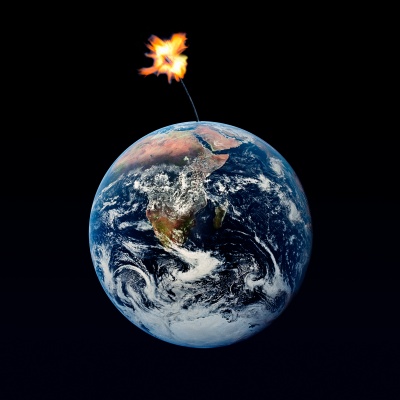
If you’d like to learn more about climate-vulnerable countries, please refer to the following article. ⇊ |
―
The Anthropocene Redefines Peace
Why Has Climate Become a Security Issue?
―
UN reports repeat the same message:
“The climate crisis is one of the greatest threats to peace in the 21st century.”
Because climate change:
• Reduces food and water availability
• Forces people to move
• Increases instability
• Amplifies conflict
▶ Why We Now Need the Idea of a “Global Community”
What makes the Anthropocene so alarming is this:
No country can solve it alone.
• When one country burns coal, sea levels rise elsewhere and crops fail in another region.
• Wildfires and deforestation in one part of the world disrupt the global carbon cycle.
Peace in this era is no longer defined as the absence of war.
It is defined as:
a state in which we do not undermine each other’s future.
―
The Name of This Era
―
Perhaps this is what we should call it:
The Anthropocene.
Or in other words,
The Century of Responsibility.
We are a single climate community sharing the same air, the same oceans, the same climate.
Which means:
One person’s choices become another person’s future.
The question is..
Will this be remembered as the collapse of civilization,
or
the turning point of civilization?
That decision belongs to those of us alive today.
“We cannot achieve prosperity while destroying the planet.”
Ban Ki-moon, Former Secretary-General of the United Nations
Written by Sharon Choi
Director of Planning
Sunhak Peace Prize Secretariat
Learn More: We live in the era of the great global extinction What is the IPCC(Intergovernmental Panel on Climate Change)? What are Planetary Boundaries? |
References & Sources Definition of the Anthropocene • Encyclopedia Britannica. Anthropocene Epoch — Conceptual definition of the Anthropocene :https://www.britannica.com/science/Anthropocene-Epoch (Britannica) Climate Science Synthesis • IPCC. Climate Change 2023: Synthesis Report (AR6) — Sixth Assessment Synthesis Report :https://www.ipcc.ch/assessment-report/ar6/ (IPCC) • Global Footprint Network. Earth Overshoot Day 2024 — Global ecological overshoot analysis :https://www.footprintnetwork.org/2024/07/21/earth_overshoot_day_2024/ (GFN) Ocean Warming, Sea Level Rise & Acidification • UNESCO. State of the Ocean Report 2024 — Global ocean science assessment Ocean and Climate Change • NASA. The Ocean and Climate Change — Ocean heat and carbon absorption :https://science.nasa.gov/earth/explore/the-ocean-and-climate-change/ (NASA) Ocean Acidification Overview • Wikipedia. Ocean Acidification — Scientific overview :https://en.wikipedia.org/wiki/Ocean_acidification (Wikipedia) Sea Level Rise Overview • Wikipedia. Sea Level Rise — Global sea level trends :https://en.wikipedia.org/wiki/Sea_level_rise (Wikipedia) Global Disaster Trends • UNDRR. Human Cost of Disasters 2000–2019 — Global disaster statistics :https://www.undrr.org/ (UNDRR) Global Food Insecurity • FAO. The State of Food Security and Nutrition in the World 2023 — Global food security report :https://www.fao.org/publications/sofi/2023/en/ (FAO) Climate Migration Projections • World Bank. Groundswell: Preparing for Internal Climate Migration — Global food security report :https://openknowledge.worldbank.org/handle/10986/29461 (World Bank) Climate Change & Health • WHO. Climate Change and Health — Health impacts of climate change :https://www.who.int/teams/environment-climate-change-and-health/climate-change-and-health (WHO) Air Pollution & Health • WHO. Air Pollution and Health — Health impacts of air pollution :https://www.who.int/health-topics/air-pollution#tab=tab_1 (WHO) Climate, Peace & Security • UNDP. Climate Change, Peace and Security — Climate–conflict–security nexus :https://www.undp.org/climate-and-security (UNDP) Climate as a Security Risk • UN Security Council. Climate Change and Security Risk — Climate security agenda :https://www.un.org/securitycouncil/content/climate-change-security-risk (UNSC) |
-
PREV What Is Gender Activism?
-
NEXT No next post.